UK Coins

Marconi Wireless Transmission £2 Coin BU

Cupro-nickel BU 2001 £2  Share This Coin:
Fully Reserved - No Longer Available at RoyalMint.com
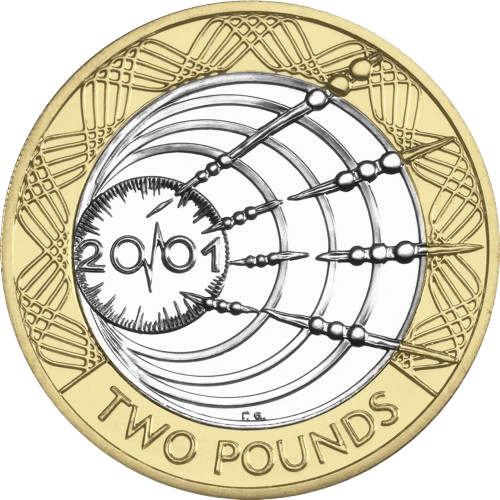
Marconi Wireless Transmission £2 Coin BU - Reverse - 2001 UK £2 Coin
Market Value
£8.00
Buy from The Royal Mint Search on eBay
Links may earn us a commission.

Right Now on eBay

LIVE LISTINGS

Affiliate Disclosure: As part of the eBay Partner Network, we may earn a commission if you make a purchase through our links, at no additional cost to you. Prices shown here may not be final. Check eBay for final selling price plus any applicable tax, import or shipping charges. These are not our products for sale. Please check all details directly with the eBay seller before committing to any purchase.

Coin Description

How much is my Marconi Wireless Transmission £2 coin worth?

The Marconi £2 coin in circulation is worth it's Face Value (FV) of two pounds. The Brilliant Uncirculated (BU) Marconi Wireless Transmission £2 Coin was available from £6.95 on issue, in as new condition the Brilliant Uncirculated £2 coin is worth about £8 to a UK coin collector.

Marconi Wireless Transmission £2 Coin BU Specifications

Weight 12.00 g
Diameter 28.40 mm
Limited Edition Presentation (LEP) 151,367
Obverse Designer Ian Rank-Broadley
Reverse Designer Robert Evans

Detailed Information

📡 2001 Marconi Wireless Transmission £2 – Brilliant Uncirculated
Brilliant Uncirculated (BU) bi-metallic £2 coin marking the 100th anniversary of Guglielmo Marconi’s first wireless transmission across the Atlantic. Struck to a higher standard than circulation coins and sold in presentation packs and sets for collectors.

BU Coin Summary & Key Facts

The 2001 Marconi Wireless Transmission £2 Brilliant Uncirculated coin shares the same design as the circulating version but is produced using specially prepared dies and carefully handled blanks. Around 151,000 BU examples were issued across Royal Mint packs and other official products, making it noticeably scarcer than the 4.5 million coins struck for circulation, but still relatively accessible as a modern collector piece.

📊

Core specifications and reference values for the BU version of the 2001 “100th Anniversary of Marconi’s 1st Wireless Transmission” £2 coin.

Aspect Figure BU-specific notes
Denomination £2 (Two Pounds) UK commemorative £2 coin; BU examples were issued for collectors rather than for general circulation.
Metal, weight & diameter Outer ring: Nickel-brass
Inner disc: Cupro-nickel
Weight: 12.00 g
Diameter: 28.40 mm
Standard bi-metallic £2 specification with a milled edge.
Year & theme 2001 – Marconi’s 1st Wireless Transmission Marks the 100th anniversary of the first transatlantic wireless signal, sent in 1901 from Cornwall to Newfoundland.
Circulation mintage (reference) 4,558,000 Number of standard circulation pieces; useful for context when comparing with BU supply.
BU mintage (total) ≈ 151,367 BU coins Approximate total across Royal Mint BU packs and other official BU presentations.
Quality Brilliant Uncirculated (BU) Sharper strike and cleaner surfaces than normal circulation coins; typically supplied protected in cards or sets.
Designers Reverse: Robert Evans
Obverse: Ian Rank-Broadley
Reverse features radio waves and the date “2001”; obverse carries the fourth portrait of Queen Elizabeth II.
Edge inscription WIRELESS BRIDGES THE ATLANTIC MARCONI 1901 Same inscription as the circulating coin, struck into the edge in incuse lettering.
Original BU issue Supplied in Royal Mint packs and annual sets Sold as individual BU cards and as part of year sets and other collector products.
Guide value (BU) ≈ £8 – £12 Typical range seen in recent online price guides and dealer listings for a clean BU coin in original packaging.
💡

The BU Marconi £2 is aimed at collectors who like the design and story but want a sharper, brighter example than you would typically find in change.

  • BU vs circulation: Circulation coins were mass-produced and bagged for everyday use, so they usually show contact marks and wear. BU coins were struck with fresher dies on cleaner blanks, then packaged for collectors, so the radio waves, “2001” date and inner details tend to be much crisper.
  • Design details to check on a BU coin: For a strong example, look for:
    • clear, separate lines in the concentric radio-wave pattern,
    • a well-defined spark between the zeros of “2001”,
    • sharp lettering in the legends and no flattening around the rim,
    • a fully readable edge inscription with minimal rim knocks.
  • Packaging and presentation: Many BU Marconi coins were sold in themed information cards or annual sets. Collectors usually prefer coins that are still sealed in original packaging, with no heavy creasing, fading or handwriting on the folder.
  • Place in a collection: This coin slots neatly into themes such as “science and technology”, “communication history”, or a full run of modern commemorative £2 BU coins from the late 1990s and early 2000s.
  • Market positioning: Because the circulation version is common and BU mintage is modest rather than tiny, the BU coin remains affordable. Prices tend to reflect presentation and condition more than raw scarcity.

Marconi's 1901 Transatlantic Wireless Success

The phrase "WIRELESS BRIDGES THE ATLANTIC MARCONI 1901" commemorates a pivotal moment in communication history when Guglielmo Marconi successfully sent the first radio signal across the Atlantic Ocean.


The Historic Achievement (1901)

The Event: On December 12, 1901, Marconi received a Morse code signal for the letter "S" (dot-dot-dot). The Distance: The transmission traveled over 2,100 miles from Poldhu, Cornwall to Signal Hill, Newfoundland. The Impact: This experiment proved that radio waves could follow the Earth's curvature, debunking contemporary theories and laying the groundwork for all modern telecommunications.

The Commemorative £2 Coin (2001)

To mark the centenary of this event, The Royal Mint issued a special £2 coin featuring:
Edge Inscription: The specific text "WIRELESS BRIDGES THE ATLANTIC MARCONI 1901." Design: A reverse image by Robert Evans showing radio waves and a spark of electricity. Status: It remains a popular find for coin collectors and is still legal tender in the UK.